Improving the Understanding and Forecasting of Winds over the Northeast U.S. Shelf: The Third Wind Forecast Improvement Project (WFIP3)
Jan 18, 2026
Understanding Bulk and Sea Spray Heat Fluxes in High Winds Using Direct Covariance Air-Sea Heat Flux Observations
Jan 15, 2026
The Role of Time- and Spatially Varying Wind in Coastal Circulation Based on High-Resolution Oceanic and Atmospheric Simulations
Jan 15, 2026
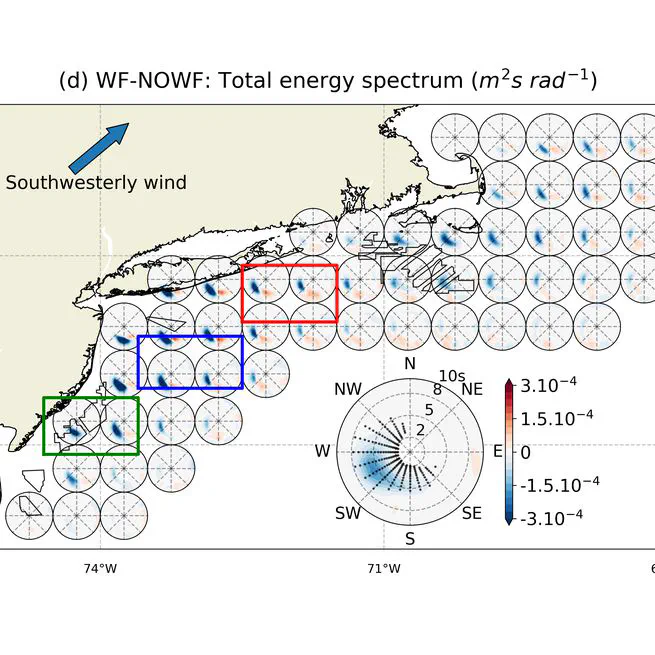
Fetch-dependent Surface Wave Responses To Offshore Wind Farms in the Northeast U.S. Coast
Large-scale offshore wind farms are expected to influence surface waves by modifying local wind forcing through wake effects. We use regional coupled ocean-atmosphere-wave model simulations to investigate a realistic large-scale offshore wind development scenario in the northeastern U.S. during boreal summer. Near-surface wind speeds are reduced by 10% over lease areas and within downstream wake regions, leading to decreases in significant wave height (3%) and wave-supported momentum flux (30%). This further leads to reductions in surface roughness length (16%) and near-surface ocean turbulent kinetic energy (20%). Spectral analysis shows a clear reduction in wind-sea energy, indicating suppressed local wind-wave growth near the wind farms. Weaker winds favor the development of longer-period waves, increasing dominant wave phase speed by 3% and suggesting a transition to an older sea state. Modern bulk flux algorithms often parameterize surface roughness using inverse wave age and/or wave slope. This raises the question of whether wake-driven reductions in inverse wave age and wave height impact air-sea momentum exchange. To assess this, we compare fully coupled simulations with an atmosphere-only run excluding wave coupling. Results show that about one-third of the reduction in roughness length can be attributed to sea state changes, while two-thirds result from lower friction velocity due to lower wind speeds. However, the impact of sea state on the drag coefficient and momentum flux is negligible (1%), suggesting that wake-induced wind speed reductions are the primary driver, with sea state changes playing a secondary role.
Dec 23, 2025
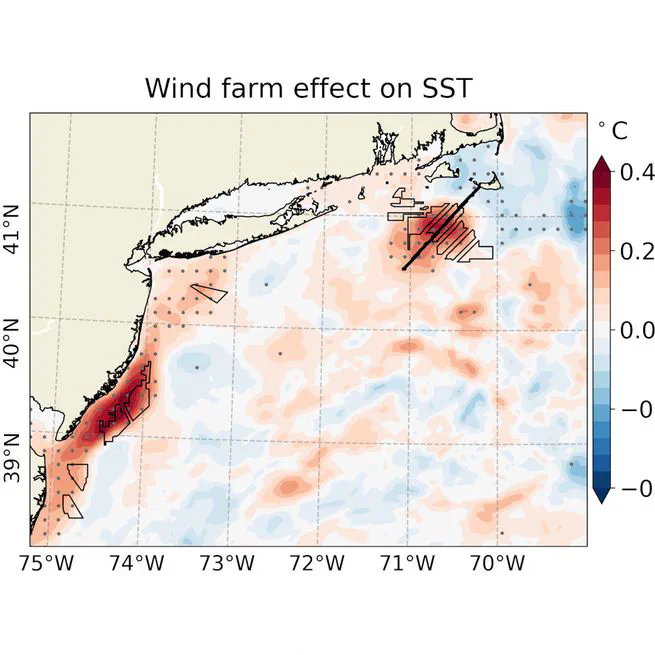
Sea Surface Warming and Ocean-to-Atmosphere Feedback Driven by Large-Scale Offshore Wind Farms under Seasonally Stratified Conditions
Offshore wind farms may induce changes in the upper ocean and near-surface atmosphere through coupled ocean-atmosphere feedbacks. Yet, the role of air-sea interactions mediated by offshore wind farms remains poorly understood. Using fully coupled ocean-atmosphere-wave model simulations for seasonally stratified conditions along the US East Coast, we show that simulated cumulative reductions in wind stress due to large-scale wind farm clusters lead to sea surface warming of 0.3° to 0.4°C and a shallower mixed layer. This warming drives upward heat fluxes, destabilizing the atmospheric boundary layer and enhancing wind stress, which partially offsets wake-induced wind deficits. These wake-ocean interactions influence near-surface meteorology and air-sea fluxes, suggesting that a coupled modeling approach may be necessary for assessing potential oceanographic impacts of offshore wind developments. However, ocean coupling exerts limited influence on winds at turbine-relevant heights or within downstream wakes, resulting in minimal impact on long-term energy. These findings suggest that models without ocean coupling may be adequate for wind energy applications.
Nov 5, 2025
The Air-Sea Interaction (ASI) submesoscale: physics and impact
During a 2023 Lorentz Workshop in Leiden, the Netherlands, a diverse community working in atmospheric and oceanic sciences and in observations and modeling met to discuss emerging ideas and questions on physical air-sea interaction (ASI) processes at the ASI submesoscale, where submesoscale is meant to include both ocean submesoscale and atmosphere mesoscale interactions. This white paper presents a strategy to unravel this emerging research theme, introducing a proposed definition of the ASI submesoscale and a hierarchy of possible interactions, as well as leading challenge questions for different ocean and atmosphere phenomena. It also outlines opportunities to target these questions, inviting the scientific community to take up the challenge to combine efforts across the different disciplines.
Nov 8, 2024
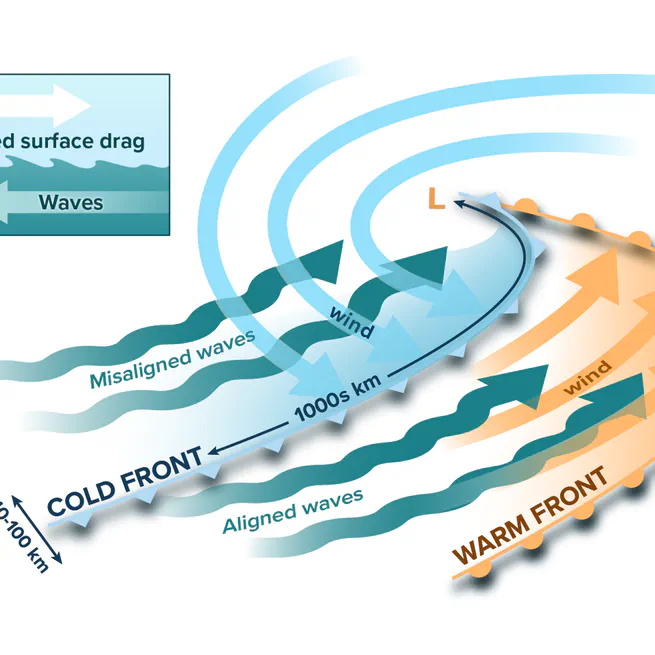
Misaligned Wind-Waves Behind Atmospheric Cold Fronts
Atmospheric fronts embedded in extratropical cyclones are high-impact weather phenomena, contributing significantly to mid-latitude winter precipitation. The three vital characteristics of the atmospheric fronts, high wind speeds, abrupt change in wind direction, and rapid translation, force the induced surface waves to be misaligned with winds exclusively behind the cold fronts. The effects of the misaligned waves under atmospheric cold fronts on air-sea fluxes remain undocumented. Using the multi-year in situ near-surface observations and direct covariance flux measurements from the Pioneer Array off the coast of New England, we find that the majority of the passing cold fronts generate misaligned waves behind the cold front. Once generated, the waves remain misaligned, on average, for about 8 hr. The parameterized effect of misaligned waves in a fully coupled model significantly increases the roughness length (185%), drag coefficient (19%), and air-sea momentum flux (11%). The increased surface drag reduces the wind speeds in the surface layer. The upward turbulent heat flux is weakly decreased by the misaligned waves because of the decrease in temperature and humidity scaling parameters being greater than the increase in friction velocity. The misaligned wave effect is not accurately represented in a commonly used wave-based bulk flux algorithm. Yet, considering this effect in the current formulation improves the overall accuracy of parameterized momentum flux estimates. The results imply that better representing a directional wind-wave coupling in the bulk formula of the numerical models may help improve the air-sea interaction simulations under the passing atmospheric fronts in the mid-latitudes.
Aug 28, 2024
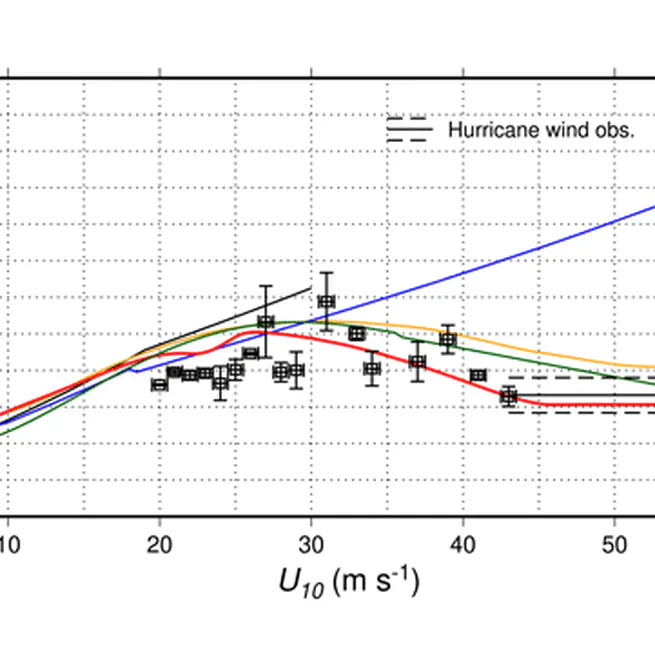
The wave-age-dependent stress parameterisation (WASP) for momentum and heat turbulent fluxes at sea in SURFEX v8.1
A widely applicable parameterisation of turbulent heat and momentum fluxes at sea has been developed for the SURFEX v8.1 surface model. This wave-age-dependent stress parameterisation (WASP) combines a close fit to available in situ observations at sea up to wind speed of 60 m s−1 with the possibility of activating the impact of wave growth on the wind stress. It aims in particular at representing the effect of surface processes that depend on the surface wind according to the state of the art. It can be used with the different atmospheric models coupled with the surface model SURFEX, including the CNRM-CM climate model, the operational (numerical weather prediction) systems in use at Météo-France, and the research model Meso-NH. Designed to be used in coupled or forced mode with a wave model, it can also be used in an atmosphere-only configuration. It has been validated and tested in several case studies covering different surface conditions known to be sensitive to the representation of surface turbulent fluxes: (i) the impact of a sea surface temperature (SST) front on low-level flow by weak wind, (ii) the simulation of a Mediterranean heavy precipitating event where waves are known to influence the low-level wind and displace precipitation, (iii) several tropical cyclones, and (iv) a climate run over 35 years. It shows skills comparable to or better than the different parameterisations in use in SURFEX v8.1 so far.
Jan 9, 2024
Improving Wave-Based Air-Sea Momentum Flux Parameterization in Mixed Seas
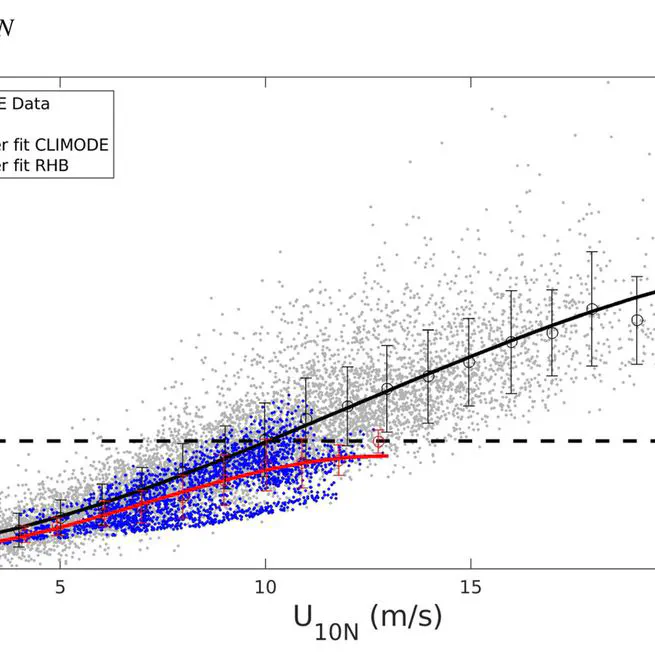
In winter, the Northwest Tropical Atlantic Ocean can be characterized by various wave age-based interactions among ocean current, surface wind and surface waves, which are critical for accurately describing surface wind stress. In this work, coupled wave-ocean-atmosphere model simulations are conducted using two different wave roughness parameterizations within COARE3.5, including one that relies solely on wind speed and another that uses wave age and wave slope as inputs. Comparisons with the directly measured momentum fluxes during the ATOMIC/EUREC4A experiments in winter 2020 show that, for sea states dominated by short wind waves under moderate to strong winds, the wave-based formulation (WBF) increases the surface roughness length in average by 25% compared to the wind-speed-based approach. For sea states dominated by remotely generated swells under moderate to strong wind intensity, the WBF predicts significantly lower roughness length and surface stress (≈15%), resulting in increased near-surface wind speed above the constant flux layer (≈5%). Further investigation of the mixed sea states in the model and data indicates that the impact of swell on wind stress is over-emphasized in the COARE3.5 WBF, especially under moderate wind regimes. Various approaches are explored to alleviate this deficiency by either introducing directional alignment between wind and waves or using the mean wave period instead of the wave period corresponding to the spectral peak to compute the wave age. The findings of this study are likely to be site-dependent, and mostly concern specific regimes of wind and waves where the original parameterization was deficient.
Mar 7, 2023
Towards kilometer-scale ocean–atmosphere–wave coupled forecast: a case study on a Mediterranean heavy precipitation event
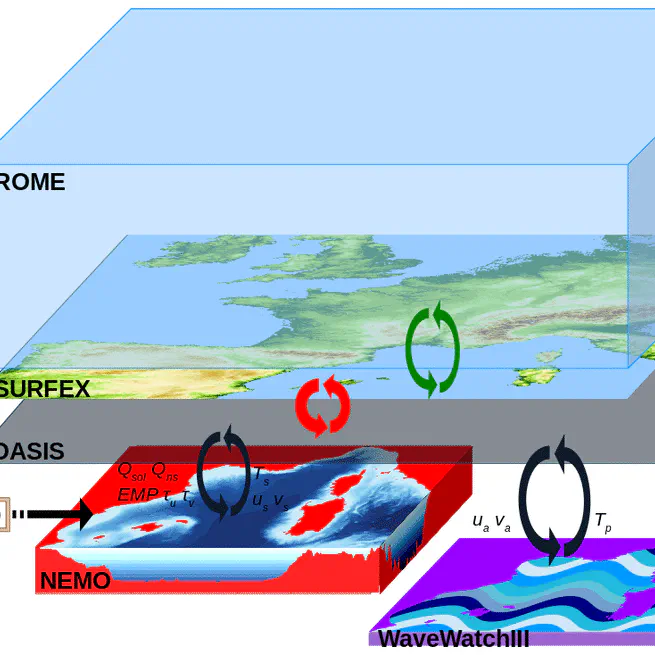
The western Mediterranean Sea area is frequently affected in autumn by heavy precipitation events (HPEs). These severe meteorological episodes, characterized by strong offshore low-level winds and heavy rain in a short period of time, can lead to severe flooding and wave-submersion events. This study aims to progress towards an integrated short-range forecast system via coupled modeling for a better representation of the processes at the air–sea interface. In order to identify and quantify the coupling impacts, coupled ocean–atmosphere–wave simulations were performed for a HPE that occurred between 12 and 14 October 2016 in the south of France. The experiment using the coupled AROME-NEMO-WaveWatchIII system was notably compared to atmosphere-only, coupled atmosphere–wave and ocean–atmosphere simulations. The results showed that the HPE fine-scale forecast is sensitive to both couplings: the interactive coupling with the ocean leads to significant changes in the heat and moisture supply of the HPE that intensify the convective systems, while coupling with a wave model mainly leads to changes in the low-level dynamics, affecting the location of the convergence that triggers convection over the sea. Result analysis of this first case study with the AROME-NEMO-WaveWatchIII system does not clearly show major changes in the forecasts with coupling and highlights some attention points to follow (ocean initialization notably). Nonetheless, it illustrates the higher realism and potential benefits of kilometer-scale coupled numerical weather prediction systems, in particular in the case of severe weather events over the sea and/or in coastal areas, and shows their affordability to confidently progress towards operational coupled forecasts.
Aug 9, 2021